
Pioneers in alternative education
Barbara Leeds remembers Nellie Dick
NELLIE DICK was born Naomi Ploschansky on the 15th May 1893, in a village near Kiev in the Ukraine. Her father chose to emigrate rather than live in the Jewish pale. Nellie was less than a year old when the family, having first lived in Whitechapel, then Leeds and Glasgow, finally settled in the East End of London.
The social milieu that she grew up in and absorbed was, by her own admission, to have a profound and lasting influence upon the young Nellie. At the age of thirteen she revived a tradition of youth activity associated with the Jewish Worker’s movement in the East End of London.
The number of children involved in Nellie’s social group grew substantially, so much so that in 1907 The Worker’s Friend Club and Institute agreed to take it over, fund it and accommodate it at Jubilee Street. It is then that some resemblance to a school could be observed.
The reality of state education for many children in the late 19th and early 20th centuries was a system that was inadequate, authoritarian, coercive and non-secular. Based on her own experience of school, Nellie objected to a system which she believed operated with the intention of indoctrinating children with the dominant order of the day: “… education is the drawing of knowledge, not the filling up.”
Nellie was a pioneer in the alternative education movement, having first started, taught in, and run schools in the East End of London from 1907-1917, Nellie was then to emigrate to the USA, where she was initially closely connected to the Modern School Movement before moving on to run her own schools from 1917-1958.
Nellie was somebody who had tried to practice education in a certain way but had never made a philosophy of it. She only ever considered herself as an educator, a pedagogue who deeply believed that the individual talents of children should be nurtured, and that education should reject regimentation and physical coercion. Throughout her life she believed in a pedagogy that provided an integral system of education, one that catered for and cultivated the whole individual.
For Nellie, education should encourage a humanistic outlook, a collective spirit, an attitude of tolerance and a creative mind. Crucial components in Nellie’s schools were freedom and enjoyment.
Throughout the years, Nellie maintained her interest in libertarian education. She never lost contact with her former students. An indication of the deep and lasting affection they had for Nellie were the regular Modern School reunions held every year, with Nellie as a rule the guest of honour.
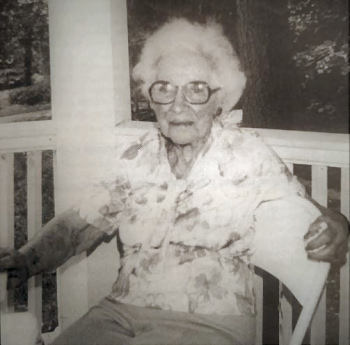
Talking to Nellie in February 1995, at the age of 102, although somewhat frail physically and with failing sight, her unshakeable fortitude of spirit and the libertarian educational tenets she upheld for some ninety years were still evident.
Nellie Dick died on 31st October 1995, aged 102.
(edited from an article in Lib Ed, #27)