

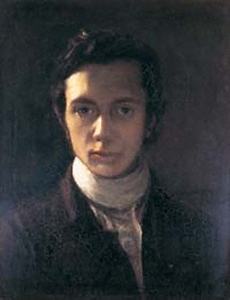
 William Hazlitt
Anyone who has passed through the regular graduations of a classical education, and is not made a fool by it, may consider himself as having had a very narrow escape. It is an old remark, that boys who shine at school do not make the greatest figure when they grow up and come out into the world. The things, in fact, which a boy is set to learn at school, and on which his success depends, are things which do not require the exercise either of the highest or the most useful faculties of the mind. Memory (and that of the lowest kind) is the chief faculty called into play, in conning over and repeating lessons by rote in grammar, in languages, in geography, arithmetic, etc., so that he who has the most of this technical memory, with the least turn for other things, which have a stronger and more natural claim upon his childish attention, will make the most forward schoolboy. . . .
There is indeed a degree of stupidity which prevents children from learning the usual lessons, or ever arriving at these puny academic honours. But what passes for stupidity is much oftener a want of interest, of a sufficient motive to fix the attention, and force a reluctant application to the dry and unmeaning pursuits of school-learning. The best capacities are as much above this drudgery, as the dullest are beneath it. Our men of the greatest genius have not been most distinguished for their acquirements at school or at the university.
From The Ignorance of the Learned, 1818