

On 22 November 2014, twelve-year-old Tamir Rice was playing with a toy gun in a park in Cleveland, Ohio, when he was shot dead by a police officer. Tamir was, of course, black. He was shot twice by a police officer who opened fire before his police car had even come to a halt. The police officer responsible, Timothy Loehmann, was never charged with any offence and an inquiry found that the shooting was justified. Now why would anyone want to write a kids' book about such a horrific incident? And how on earth would you go about writing it?
The fact is that such events are so common in the United States that even from an early age, black children are routinely warned by their parents about the threat posed by the police and about how to negotiate trouble and hopefully avoid any danger. More generally, the police are an ever present and everyday danger to black men and women, a reality that went global with the killing of George Floyd, but that has been inscribed in US history from the country's very foundation. And, of course, during Donald Trump's presidency, open racism moved back into the mainstream of US political discourse. The need for a book dealing with this question is obvious. If parents are having to warn their kids about how to avoid being shot by the police, then it is a subject that demands to be written about.
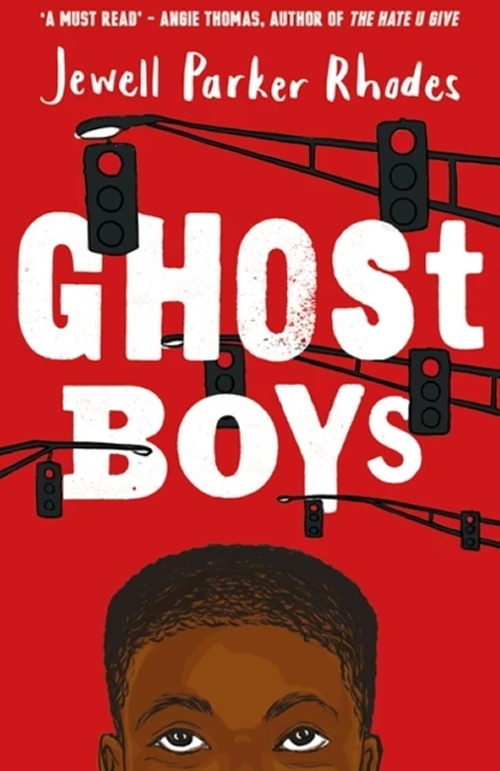
Jewell Parker Rhodes' novel, Ghost Boys, published in 2018, shows exactly how it should be done. Her main character, Jerome, a twelve-year-old black kid is shot dead while playing with a toy gun and his ghost is the witness to subsequent events. He is not alone. Waiting to speak to him, to offer him support and give him a purpose is the ghost of Emmett Till, the fourteen-year-old black teenager, who was brutally lynched, tortured, mutilated and shot in Mississippi in August 1955. His offence was to have allegedly whistled at a white woman. He hadn't. His killers did stand trial but were inevitably found not guilty by an all-white jury despite most of the jurors subsequently acknowledging that they knew the accused had brutally murdered the boy but that they did not really see it as a serious crime. Incredibly, witnesses to the murder were actually locked up in jail until the trial was over so they could not testify. And soon after their acquittal, his killers publicly admitted their guilt, although guilt is the wrong word to describe their attitude to the crime they had committed. Emmett's mother bravely had an open casket at his funeral so everyone could see what had been done to her boy.
And accompanying Emmett are other ghost boys, the innumerable victims of racism. Rhodes even includes 'Tamir…with a toy gun' in their number. Jerome asks Emmet: "Will the murders stop?" He replies: "One day. Got to believe Jerome. You've got to believe". And Jerome realises that the thousands of ghost boys are still there because they "are trying to change the world", determined not to be forgotten, giving witness to injustice, "Until skin colour doesn't matter. Only friendship. Kindness. Understanding".
Only one living person can see Jerome. His grandmother is aware of his presence, but Sarah, the young daughter of the policeman who killed him, can both see him and talk to him. They eventually become friends. She can also see Emmett and the hundreds of other 'shadow boys'. She loves her father but is appalled by what he has done and towards the end of the book is making a website, 'End Racism, Injustice'. She has educated herself into the crimes of racism since her father killed Jerome, discovering, for example, that in 2015, "over one thousand unarmed black people were killed". She is determined that Jerome will not be forgotten: "People should know".
Rhodes has written a tremendous book, an important book, a book that emphasises the need to 'bear witness'. It deals with a horrific reality in a way that shows both incredible sensitivity and absolute determination. Sometimes it is, as one would expect, a difficult read emotionally, but the issues it tackles make the effort wholly worthwhile. In her 'Afterword', she hopes that "parents and teachers will read Ghost Boys with their children and students, and discuss racial prejudices and the tensions that still haunt America". We can add Britain to that. And, of course, that swine Gavin Williamson will hate it.
One last point, Rhodes' adult novel, Magic City, about the Tulsa pogrom of the summer of 1921, has just been republished. She has also written a number of other kids' books and has a new one, Paradise on Fire, coming out towards the end of the year.
Ghost Boys
Jewell Parker Rhodes
Orion Children's Books £6.99